


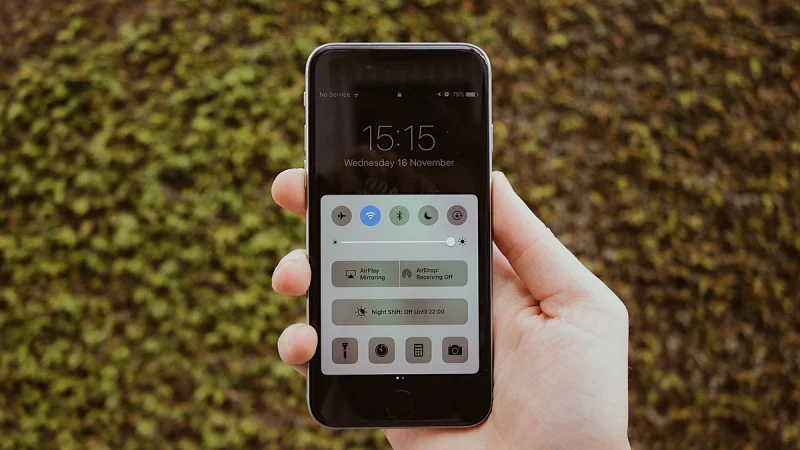
The iOS 27.2 update has reached its last stretch: according to Appleosophy and iPhone in Canada, Apple seeded the iOS 27.2 Release Candidate (RC), build 24B115, to developers on 19 October 2026, about a week after beta 4. Apple has not announced a public release date; specialist press expects it “by the end of the month”, which is an estimate, not an announcement.
For an engineer who manages corporate iPhones and iPads, the question is not “what is new?” but “how do I roll this out without breaking anything, and how do I prove it?”. This article separates what is established from what is assumed, then describes an MDM rollout and tracking method. span.observer has not installed this RC: everything below comes from the sources cited.
iOS 27.2 update: what is established on 22 October 2026
- RC of 19 October: iOS 27.2 and iPadOS 27.2 carry build
24B115. Appleosophy (published 19 October 2026) and iPhone in Canada give the same number. - Other RCs the same day (Appleosophy): macOS 27.2 as
26B118, watchOS 27.2 as24S116, tvOS 27.2 as24K120, visionOS 27.2 as24N118. - Access: registered developers pick “iOS 27 Developer Beta” under Settings > General > Software Update > Beta Updates.
- Release date: not announced by Apple. Appleosophy writes that it expects a release “by the end of this month”; that is the author’s view.
Feature content is deliberately left out: beta coverage contradicts itself on some items (for example the Health interface, present in one beta and removed in another according to Appleosophy). An RC build can also be replaced before the final version. Before approving a rollout, read Apple’s official release notes for the exact build you target.
The engineering angle: deploying iOS 27.2 to a fleet
A modern MDM does more than send an “update now” order. In its public apple/device-management repository, Apple describes a declarative management declaration, com.apple.configuration.softwareupdate.enforcement.specific, available since iOS 17 for supervised or device-enrolled devices. Its keys, checked in the YAML definition:
TargetOSVersion(required): the target version, for example27.2;TargetBuildVersion(optional): the target build; the definition says to use it “for testing during seeding periods”;TargetLocalDateTime(required): local date and time for the forced install, inyyyy-mm-ddThh:mm:ssformat, with no time zone or fractional seconds;DetailsURL(optional): an information page for the user.
Two documented behaviours are worth noting. If the requested version and build match no available update, the configuration stays active but the device cannot update. And if the device is off at the target time, the install is forced one hour after restart, or as soon as conditions such as minimum battery level are met.
A ring-based plan
- Ring 0 (platform team): a few devices enrolled in the beta programme, RC build
24B115forced withTargetBuildVersion. - Ring 1 (volunteers): a few percent of the fleet, after the public release, version
27.2only. - Ring 2 (whole fleet): a distant target date, so users have time to start the update themselves.
This split is span.observer’s proposal, not an Apple recommendation. It borrows from the usual deployment rings of a workstation fleet.
Track the rollout with data, not impressions
The same documentation lists status items tied to this declaration: softwareupdate.install-state, softwareupdate.pending-version, softwareupdate.failure-reason and softwareupdate.install-reason. They give a natural SLI for a rollout: the share of devices whose install state is complete, per ring. With a classic MDM command, the device information query also exposes OSVersion and BuildVersion, useful for counting devices per build.
Export these counters to your observability platform (Dynatrace SaaS, Dynatrace Managed or another) as metrics: devices per version, per ring, per failure reason. To choose good indicators, see choosing your SLIs with DQL. For the logic of a controlled server-side upgrade, compare with Managed cluster updates.
What to watch after the update
- The install success rate per ring, and the median time between rollout date and the “installed” state.
- Support tickets and business-app crashes per iOS version: without the version label, an incident cannot be tied to the update.
- Corporate apps (VPN, strong authentication, mail) tested before each ring.
This approach is observability rather than plain monitoring: you try to explain a gap (“why do 12% of devices remain on 27.1?”), not just display a counter.
Best practices
- Do not base a production rollout on an RC: wait for the public version and check the final build.
- Keep a permanent ring 0 for every major or minor iOS release.
- Version your MDM declarations in a Git repository and review them like code.
- Re-read Apple’s definition before each rollout: keys and prerequisites change between versions.
Frequently asked questions
When is the iOS 27.2 update released?
Apple had not announced it when this article was written. The Release Candidate went to developers on 19 October 2026; specialist sites expect a release before the end of the month, with no commitment from Apple.
Should the RC go on corporate devices?
No, except on a small test group. An RC can change before the final version, and the final build may differ.
How do I force iOS 27.2 from an MDM?
If your MDM supports declarative management, the softwareupdate.enforcement.specific declaration describes the target version and the forced install date. Check support with your vendor.
Conclusion
The iOS 27.2 update is close, but its date is unofficial. Use the delay to prepare your rings, indicators and tests. Sources: Appleosophy, iPhone in Canada and apple/device-management.
span.observer is an independent community blog, not affiliated with Apple Inc. or Dynatrace LLC. Trademarks belong to their owners. Information changes quickly: check it in the official documentation.