




FedRAMP High Initial Implementation: on 12 October 2026, Dynatrace announced in a press release that it had reached “Initial Implementation” status for FedRAMP Class D (High). That status does not say the platform is certified at Class D: it describes a phase of work, visible on the FedRAMP Marketplace. This article reads those words in the official fedramp.gov pages, checked on 29 October 2026.
Why should an SRE care? Because the choice of an observability tool sometimes depends on the compliance a customer requires. It is better to tell an announcement from a certification before writing it into a procurement or architecture file.
A word of honesty: span.observer is an independent blog, not affiliated with Dynatrace or the FedRAMP programme, and it gives no legal advice. What follows is my own analysis, with nothing taken from the press release.
FedRAMP High Initial Implementation: what the announcement says
- Date and source: Dynatrace press release of 12 October 2026. The vendor presents “Initial Implementation” as a step before full Class D (High) certification, not as the same thing.
- What the vendor says it aims for: once certified, letting US agencies use the platform for their most sensitive workloads. These are goals, not observed facts.
- Earlier step: on 2 July 2026, another vendor release described a plan to pursue FedRAMP High and recalled a FedRAMP Moderate authorisation dating from 2020.
The release is a vendor document and carries a forward-looking statements warning. I treat it as such: a source on what Dynatrace announces, not proof of what the programme has validated.
Initial Implementation: what fedramp.gov says
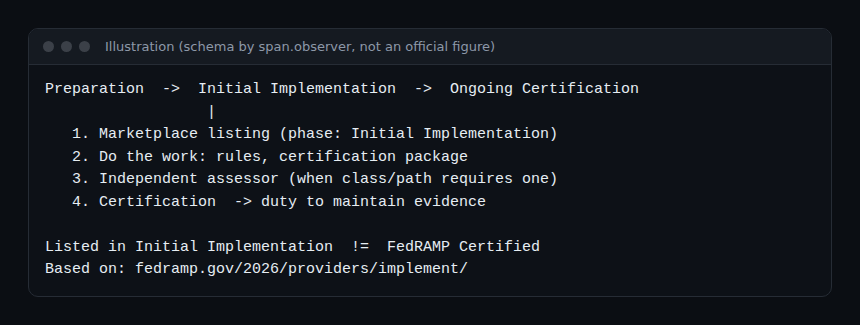
The meaning of these two words can be read in FedRAMP’s Consolidated Rules for 2026. The programme describes a path in three phases: Preparation, Initial Implementation, Ongoing Certification. In the second, the provider gets listed on the Marketplace as “Implementing”, does the work the rules require, works with a recognised independent assessor when the target class requires one, then applies for certification.
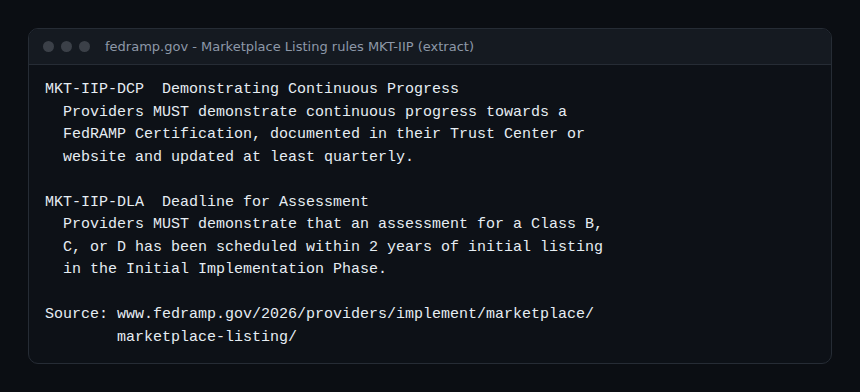
Two Marketplace rules give this phase concrete content (MKT-IIP references):
- the provider must document continuous progress, updated at least quarterly, on its Trust Center or website;
- it must show that an assessment for Class B, C or D is scheduled within two years of its first listing. Otherwise FedRAMP removes the listing until evidence of a scheduled assessment is given.
The fedramp.gov changelog adds that a “Phase” field (Initial Implementation / Ongoing Certification) was added to the Marketplace on 17 July 2026. A separate status, “FedRAMP Certified (In Remediation)”, also exists: do not confuse it with the phase.
One point stays unanswered. I read the pages above and RFC-0036 on the Class D pilots, and none says that Class D “Initial Implementation” guarantees controls that are already implemented or assessed. The pages describe progress obligations and a timetable, not an assessment result. If an agency needs more detail, the agency and the vendor must supply it.
Class D, impact levels and “High”
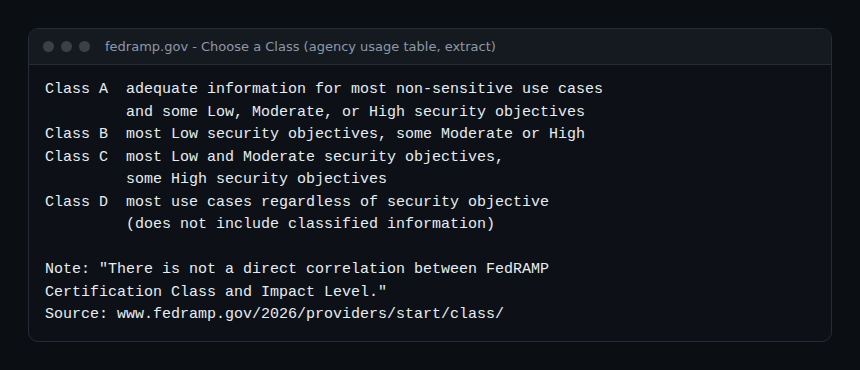
On 4 May 2026, FedRAMP replaced the words “authorization” and “levels”: it now speaks of “FedRAMP Certification” and of Classes A, B, C and D. Class D is the highest. The release links it to the “High” level.
FedRAMP warns that classes “loosely” align with the NIST SP 800-53B baselines (Low, Moderate, High, from FIPS 199), but that there is no direct correlation. The reasons: providers can tailor controls, and agencies can build a system from components of different categories. On the agency-use page, Class D is described as suitable for most use cases, excluding classified information.
In practice, writing “Dynatrace is High” would be a shortcut. The accurate wording today is “listed in the Initial Implementation phase for Class D”.
Announcement, listing and certification: three different things
- Vendor announcement: a press release, with the usual forward-looking risks.
- Initial Implementation listing: a Marketplace entry signalling work in progress and progress commitments. According to fedramp.gov, every provider must go through this listing before applying for certification.
- Certification: the final step, with its assessments, followed by a duty to maintain evidence.
The release itself describes full Class D certification as still to come. No date is given in the sources I read.
What an SRE can check
- Open the product page on the FedRAMP Marketplace and read the class, phase and status shown, rather than a headline. I could not read the detailed product page (it is rendered in JavaScript), so I do not describe it.
- Ask for the scope: which offering (SaaS, Managed) and which features are inside the boundary. On the difference between the two models, see Managed or SaaS: how to choose.
- Read the provider’s Trust Center: the rules require a quarterly progress update.
- Pair compliance with your own security practice: vulnerability detection with Application Security and securing an MCP server are your own controls, not a vendor’s status.
Best practices: always cite the class, the phase and the date you read it; write “announced” for a press release; infer no commercial advantage from a status; have any regulatory use validated by your compliance officer or a lawyer.
Frequently asked questions
Does FedRAMP High Initial Implementation mean Dynatrace is certified High?
No. According to fedramp.gov, Initial Implementation is the phase where the provider works towards certification, with a Marketplace listing. The release itself speaks of full certification still to come.
Is Class D the same as the High level?
It is close, but FedRAMP says there is no direct correlation between class and impact level. Controls can be tailored and agencies compose their systems.
What should I do if a federal customer requires FedRAMP?
Read the Marketplace listing, ask for the exact scope, and have the consequences validated by your compliance team. This blog gives no legal advice.
In short, “Initial Implementation” is a progress phase described by fedramp.gov, with a listing, quarterly updates and an assessment to schedule within two years. It is not a certification. Sources: fedramp.gov, Initial Implementation, Choose a Class, the fedramp.gov changelog and the Dynatrace press release of 12 October 2026, read on 29 October 2026.
span.observer is an independent community blog, not affiliated with Dynatrace LLC or the FedRAMP programme. This text is not legal advice. Brands mentioned belong to their owners. Statuses change: check them on the FedRAMP Marketplace.